
Bruno Carvalho
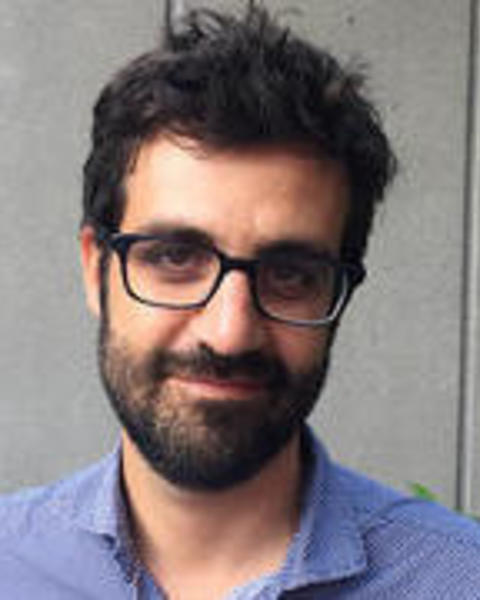
Bruno Carvalho specializes in urban life and how cities change. He is the author of The Invention of the Future: A History of Cities in the Modern World (Princeton University Press, 2026). The book opens in the 1750s, when city dwellers and planners began to assume that the future would be radically different from the past. It recasts modern urbanization within a history of competing visions, amid dramatic technological, intellectual, and cultural transformations. The book argues that the futures of the past can help us better understand the history of built environments, as well as our own crossroads in an increasingly urban world.
His interdisciplinary approaches tend to bridge history, literary analysis, and the social sciences that contribute to understanding urbanization. His award-winning Porous City: A Cultural History of Rio de Janeiro was published in Brazil in a revised and expanded edition. Carvalho has published numerous articles, essays, and edited volumes. He is co-editor of Occupy All Streets: Olympic Urbanism and Contested Futures in Rio de Janeiro (2016) and of the book series Lateral Exchanges (University of Texas Press), on historical and contemporary issues in design and the built environment (with Alison Isenberg).
At Harvard, Carvalho is Co-Director of the Harvard Mellon Urban Initiative, and Chair of the Faculty Standing Committee on History and Literature. He is a Faculty Affiliate in Critical Media Practice, at the Afro-Latin American Research Institute, the David Rockefeller Center for Latin American Studies, the Salata Institute for Climate and Sustainability, the Graduate School of Design, the Bloomberg Center for Cities, the Weatherhead Center for International Affairs, and the Center for Population and Development Studies. Carvalho serves on the boards of the Dumbarton Oaks Ex Horto book series on garden and landscape studies, the Mellon Democracy and Landscape Initiative, and the Temple Hoyne Buell Center for the Study of American Architecture at Columbia University.
To learn more about Professor Carvalho and his research, read these recent interviews with the Harvard Gazette, DRCLAS, and Brazilian publications Nexo and O Globo (in Portuguese).
Selected recent publications:
The Invention of the Future: A History of Cities in the Modern World
“Open Futures: On Ends and Endings in the Conversational Documentaries of Eduardo Coutinho and Errol Morris,” Listening to Others (eds. Natalia Brizuela and Krista Brune)
NYT op-ed on urbanization, deforestation, and bio-economies in the Amazon (with Carlos Nobre).
NYT op-ed on the war on drugs, state violence, and racism.
NYT op-ed on deforestation in the Amazon and our planetary futures.
“The Future as a Necessity: Reading Clarice Lispector in the Anthropocene,” Literature Beyond the Human (eds. Luca Bacchini and Victoria Saramago)
“Urban and Environmental Scales of Belonging in the Digital Age,” Companion to Twentieth and Twenty-First Century Latin American Literary and Cultural Forms (eds. Guillermina de Ferrari and Mariano Siskind)
“O que será diferente amanhã?,” Tomorrow Anew
“Não foi você: uma interpretação do bolsonarismo.”
“Where Did the Future Go?,” Between Catastrophe and Revolution (eds. Daniel Bertrand Monk and Michael Sorkin)
“Learning with São Paulo,” São Paulo: A Graphic Biography (bilingual edition)
“Imagined Futures,” Fluvial Metropolis: Past Visions /Future Imaginaries (bilingual edition)
“Partian Enlightenments: Predecents & Possibilities for the 18th Century in Luso-Brazilian Studies”
“Who’s Afraid of Hilda Hilst?” (with Adam Morris)
“Anchor Arts Institutions & Divided Cities”
“Writing Race in Two Americas: Blackness, Science and Circulation of Knowledge in the Eighteenth-Century Luso-Brazilian World and the United States”;
“Rio, City of Epithets: Olympic urbanism in context”; “Occupy All Streets: Protesting a Right to the Future”; “Um erradio na Cidade Nova;”
“An Arcadian Poet in a Baroque City: Cláudio Manuel da Costa’s Urban Pastorals, Family Life, and the Appearance of Race.” “Introduction,” Hilda Hilst, Letters from a Seducer; “Entre dois palcos: o futebol e o teatro na literatura de Nelson Rodrigues;” “A favela e sua hora,” English version: “The Favela and Its Moment”; “Filmes sem futuro: reflexões sobre fins e finais em documentários de Errol Morris e Eduardo Coutinho,” Cinema, A Indústria Radical; “From Iberia to Recife: Mysticism and Modernity in Manuel Bandeira’s Earlier Poetry;” “Um Outro Sertão Literário: linguajar pantaneiro e espaço nacional em Inocência de Taunay;” “A ética de andar nas ruas do Rio de Janeiro;” “A Tale of Three Buildings: Brazil’s Estado Novo;” “Charting Brazil in Borges;” “Mapping the Urbanized Beaches of Rio de Janeiro: Modernization, Modernity, and Everyday Life.”
Research and Teaching Interests:
Urban Studies; interplays between urban diversity, inequality and segregation; race and the history of racism; sociospatial theory; architecture and urban planning; migration; environmental humanities and climate change; film and media studies; Latin American studies; Luso-Afro-Brazilian literatures and cultures.