
The “Floating Options”: Waterborne Migrant Housing in Europe, 1987-2006
Project Overview
This research traces the spatial and political trajectories of floating migrant housing in Europe from 1987 to 2006, focusing on a fleet of converted vessels operated by the Bibby Line. These barges—including the now-infamous Bibby Stockholm—were repurposed over time as prisons, refugee accommodations, and military barracks across the UK, Germany, the Netherlands, Sweden, and the United States. The study explores how maritime infrastructure intersects with migration control, biopolitical governance, and architectural form. What emerges is a typology I call the ship-camp-city: a mode of urbanism at sea that suspends stable categories of dwelling, legality, and territory. Often justified as emergency or cost-effective housing solutions, these ships operate as instruments of both logistical convenience and symbolic exclusion—outsourcing displacement to the littoral edge.
Research Activities
Archival Research (UK, Summer 2024): With the support of the HMUI grant, I conducted research at the National Maritime Museum in Liverpool and the UK National Archives in Kew. In Liverpool, I accessed the Bibby Line collection, including ship plans, internal memoranda, and leasing agreements concerning the fleet’s repurposing. At Kew, I reviewed Home Office documents and internal reports related to the “Earl William” ferry incident (1987) and the use of barges as asylum infrastructure.
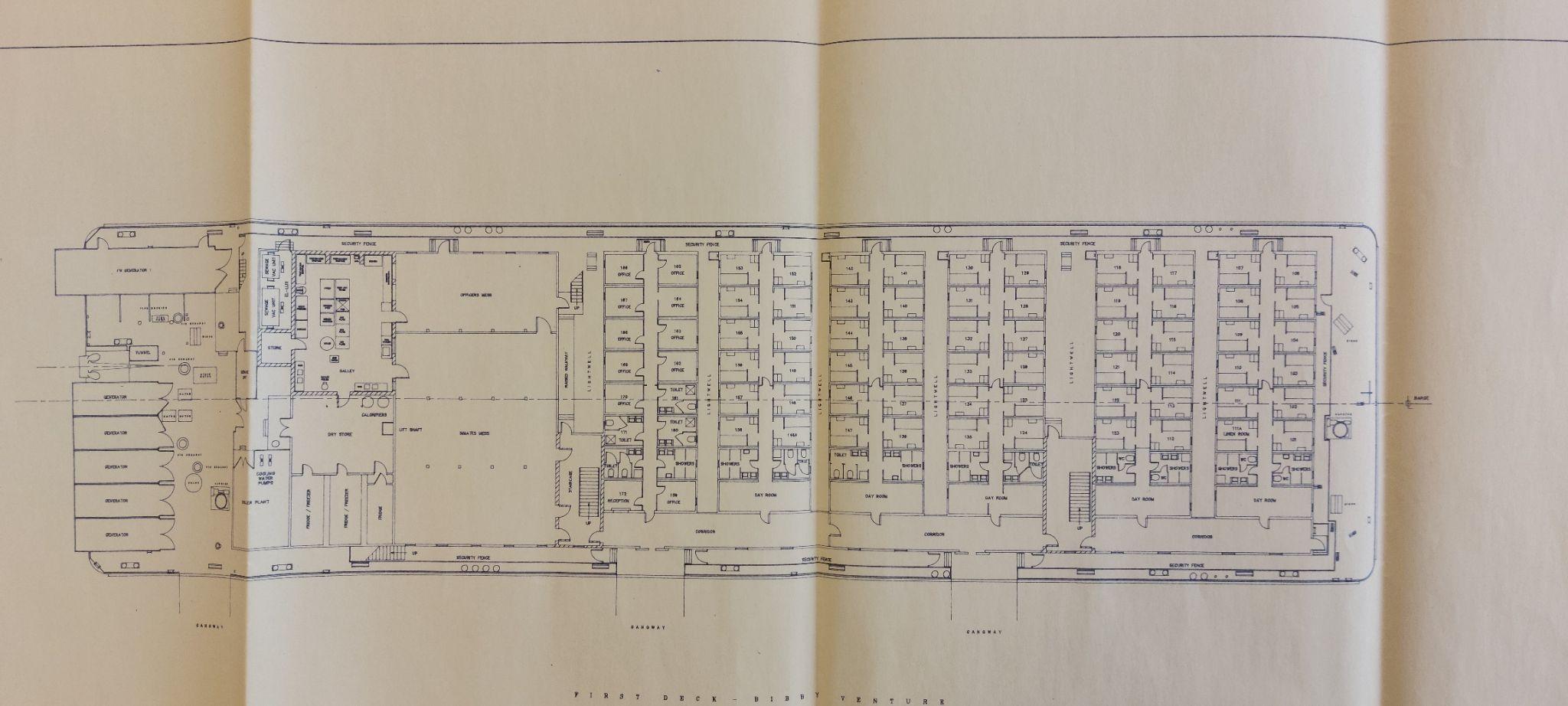
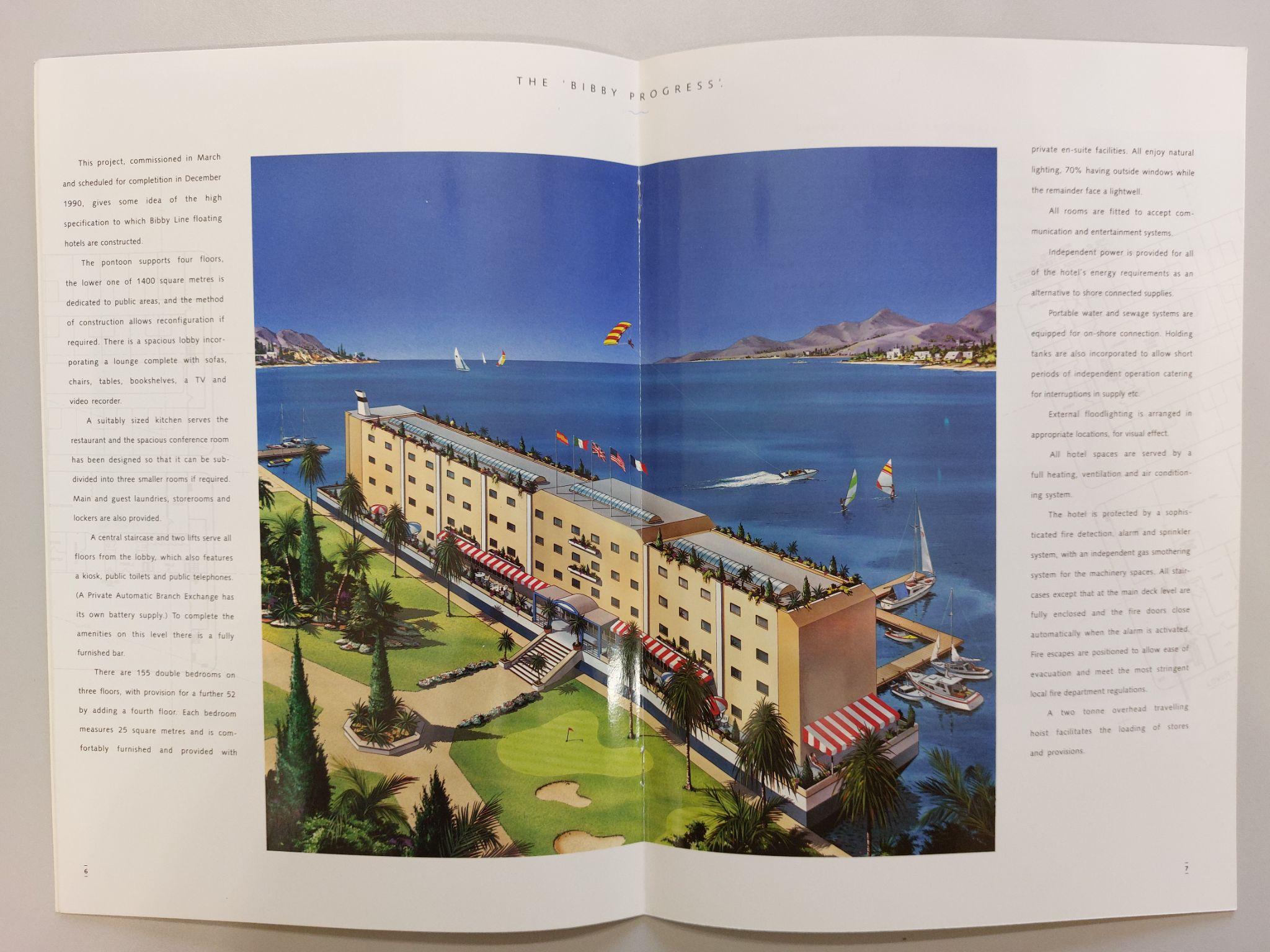
Example Archival Material from Maritime Museum in Liverpool
Theoretical Framework
The research is informed by the political theories of Michel Foucault and Giorgio Agamben, particularly concepts of exceptional space, biopolitics, and sovereign suspension. It also engages with architectural and migration scholarship by Anooradha Siddiqi, Andrew Herscher, and Michel Agier to theorize the aesthetics and implications of enforced maritime liminality.
Conclusions and Future Directions
This project contributes to a growing body of scholarship on extraterritorial architectures of control and exclusion. By bringing archival rigor to the subject of floating detention and asylum infrastructures, it highlights how urban strategies are deployed on and through the sea. The concept of the ship-camp-city serves as a framework for future research on offshore governance, crisis urbanism, and architectural normalization of migration management.
Researcher: Yifei Zhang